

It’s the holiday season. Diwali was yesterday, and Black Friday is less than three weeks away.
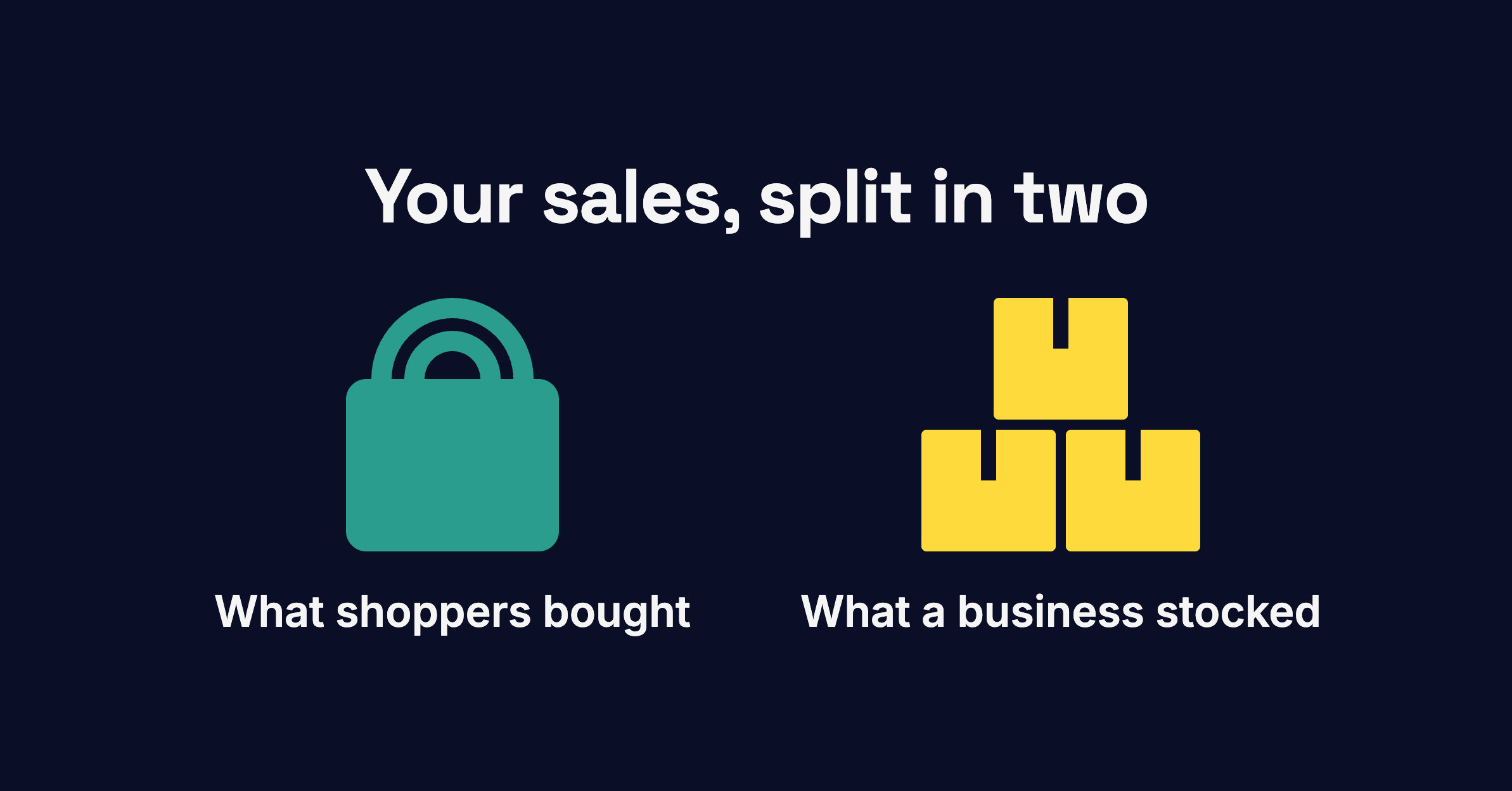
Soon someone will put your season’s sales on a slide, and the room will read it as a verdict on your shoppers. Before that happens, split the number in two. Part of it is what shoppers bought. The rest is what a business decided to stock.
First, what counts as direct
D2C, or DTC if you’re in the US, strictly means the shopper buys from a channel you own: your website or app, or your own store.
Most brands we call D2C sell through other people too. A marketplace where you’re the seller is e-commerce, and the shopper is still your customer. But once a retailer or a distributor buys your stock, that part of your business is wholesale. Your customer is a business now. It orders for its own reasons, and your shoppers are only one of them.
The quarter shoppers bought more and sales fell
The Honest Company, the US baby and household brand, calls itself digitally native. In 2025, about 91% of its revenue came from selling to retailers, for their shelves and their websites. So by that definition, most of Honest’s business is wholesale.
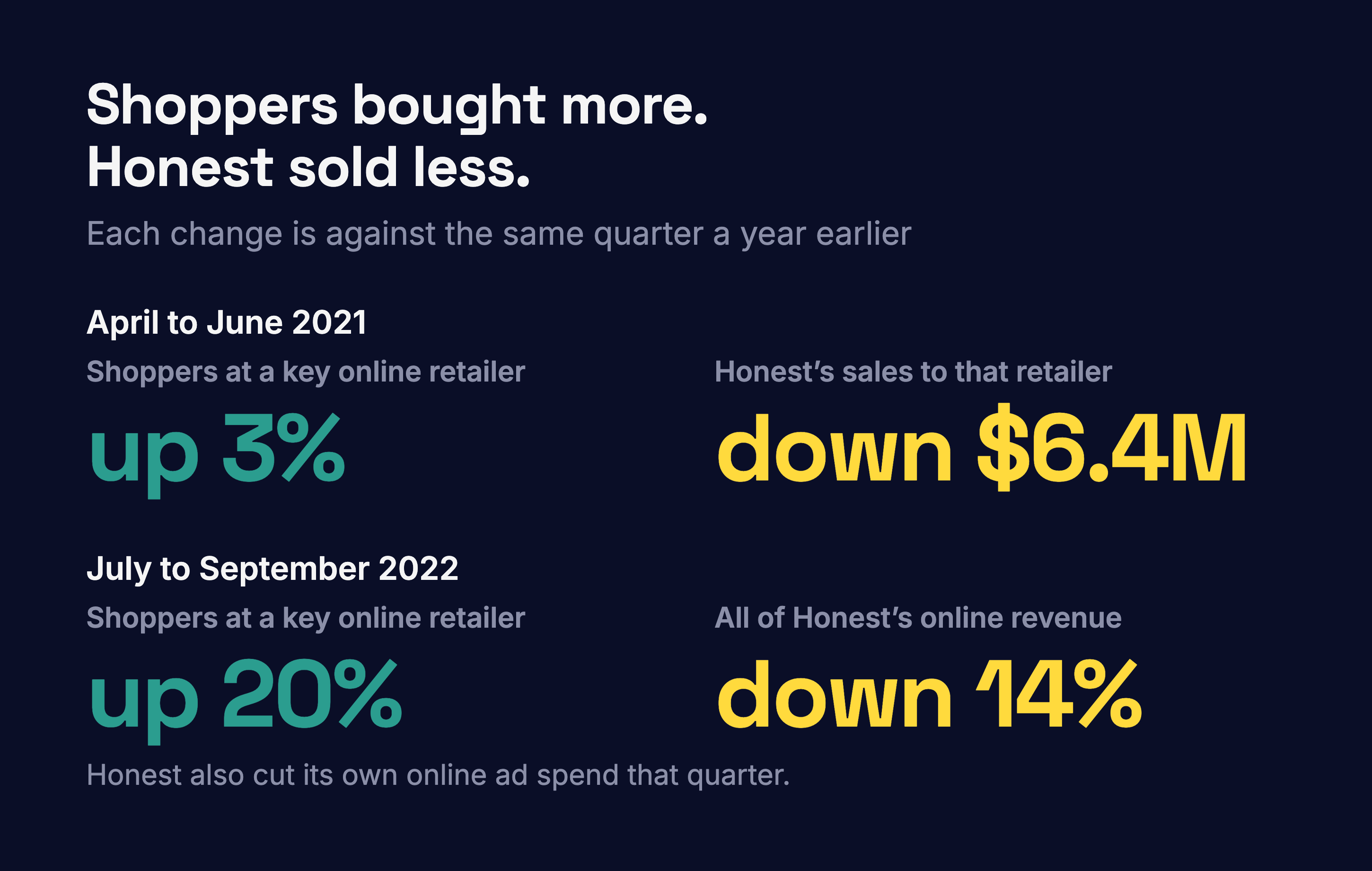
Between April and June 2021, its sales to one key online partner fell by $6.4 million from a year earlier. Over the same three months, Honest said, shoppers bought 3% more of its products there.
What happened? The partner had cut its stock “to free up space for other products ahead of a major promotional event”. Shoppers kept buying. The partner just ordered less.
It happened again in 2022. Between July and September, Honest’s online revenue fell 14%. A key online customer had cut its stock, and shipments for its national promotion landed at a different time from the year before. Yet Honest said shoppers at that retailer bought 20% more. To be fair, Honest had also cut its own online ad spend that quarter.
Then it swung back. Honest’s revenue rose $14.7 million in the first three months of 2023. One customer accounted for $11.0 million of that, building its stock back up after running it down a year earlier.
In each of those quarters, Honest’s revenue said more about a retailer’s warehouse than about its shoppers.
Sales that ran ahead of the shelf
Honasa, the Indian beauty company behind Mamaearth, shows the gap running the other way.
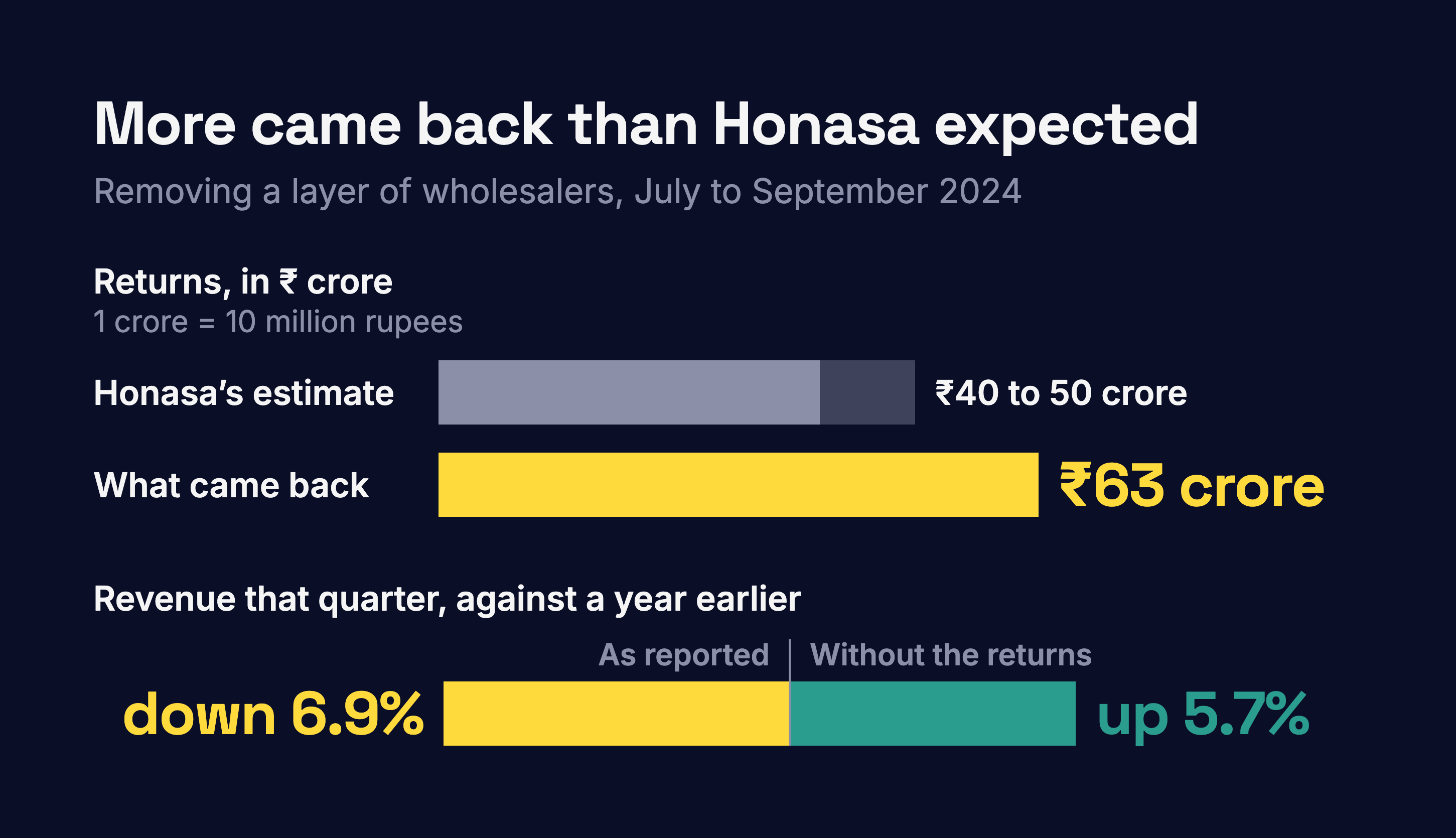
Its products reached India’s neighbourhood shops through layers of wholesalers. Between July and September 2024, it removed the top layer, known in India as super-stockists, from its top 50 cities. Then ₹63 crore of sales came back as returns. Instead of growing 5.7% that quarter, revenue fell 6.9%.
Honasa had told investors to expect ₹40 crore to ₹50 crore. On the results call, chief executive Varun Alagh explained why the real number came in higher. Largely, he said, because most of what the company knew came from the stock data “we were seeing just for the super-stockists”. When an analyst asked how much distributors’ sales to shops had grown, Alagh said that wasn’t a number the company could fully track.
Its latest annual report sums up the old model in one line: reach, “but little line of sight into what was actually selling and where”.
Why this is about you
The gap is still there. Honest’s annual filing for 2025 says some retail customers changed how much stock they held, or how often and how much they ordered.
Honasa, a brand born online, now uses the word B2B itself. Its August results deck credits part of its jump in margin to a “higher mix of more profitable B2B channels led by offline”. And last year in India, even the quick-delivery app Blinkit moved to owning the stock it sells. Its parent company said it would “start working with brands directly”. That’s one more business that owns your stock.
In August I wrote that the deal now dies after you win it, in a security review or a finance veto. A sale to a business that owns your stock can die after you ship it too, as returns or as the reorder that never comes.
The second number
Both companies still sell through partners. They just watch a second number now.
In all three quarters, Honest’s results release put what shoppers bought right beside its revenue. That’s why anyone outside can see these gaps at all.
Honasa says its distributors now hold about 30 days of stock, and the orders it takes from them factor in “stock already in the system”. On its August call, management said: “Tracking cash is the best way to, sort of, ensure you are tracking the health of a distribution system.”
My reading: if you sell through distributors, collections are the cheapest sell-through report you have. A distributor that’s selling your stock pays you on time. One that’s stuck with it starts paying late.
Revenue from partners has the same flaw I wrote about in net revenue retention. There, the expansion everyone celebrated was often customers hiring and a price clause. When a number moves with someone else’s decisions, it needs a second number beside it.
What I’m not saying
I’m not saying selling through retailers or distributors is a mistake. Honasa’s annual report says its channels earn broadly similar contribution margins, and its deck calls the B2B ones more profitable.
And only the slice where a business owns your stock needs the second number. Your own channels already record what the shopper bought.
So, one question for this season. How many weeks of your stock is your biggest retailer or distributor sitting on right now? Answers in the comments, please.
If this was useful, subscribe. The weekly issue stays free.
Figures from The Honest Company’s SEC filings and results releases (2021 to 2026), Honasa’s FY26 annual report (the year to March 2026), results decks and call transcripts, and Eternal’s shareholder letters. Call quotes are from the transcripts Honasa publishes. Read on 15 and 17 October 2026.
Monday GTM is a weekly read on how B2B go-to-market actually works, for the people doing the work. No theory, no fluff. Just what holds up when you look closely.
I write Monday GTM alongside my work at Loop & Ladder, a growth consultancy.