

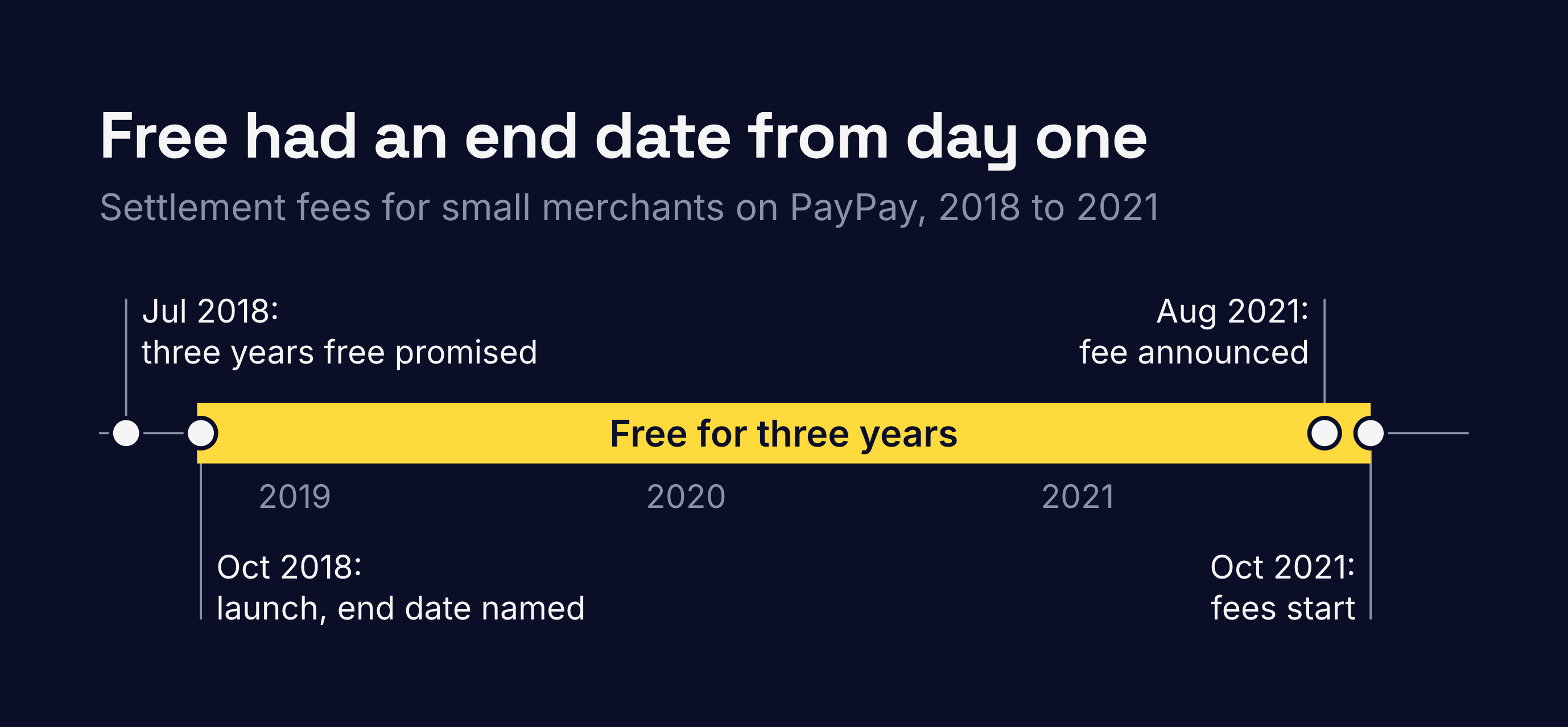
In August 2021, PayPay told the small shops using it that FREE was ending. After three years of taking payments without a fee, they would start paying one in October.
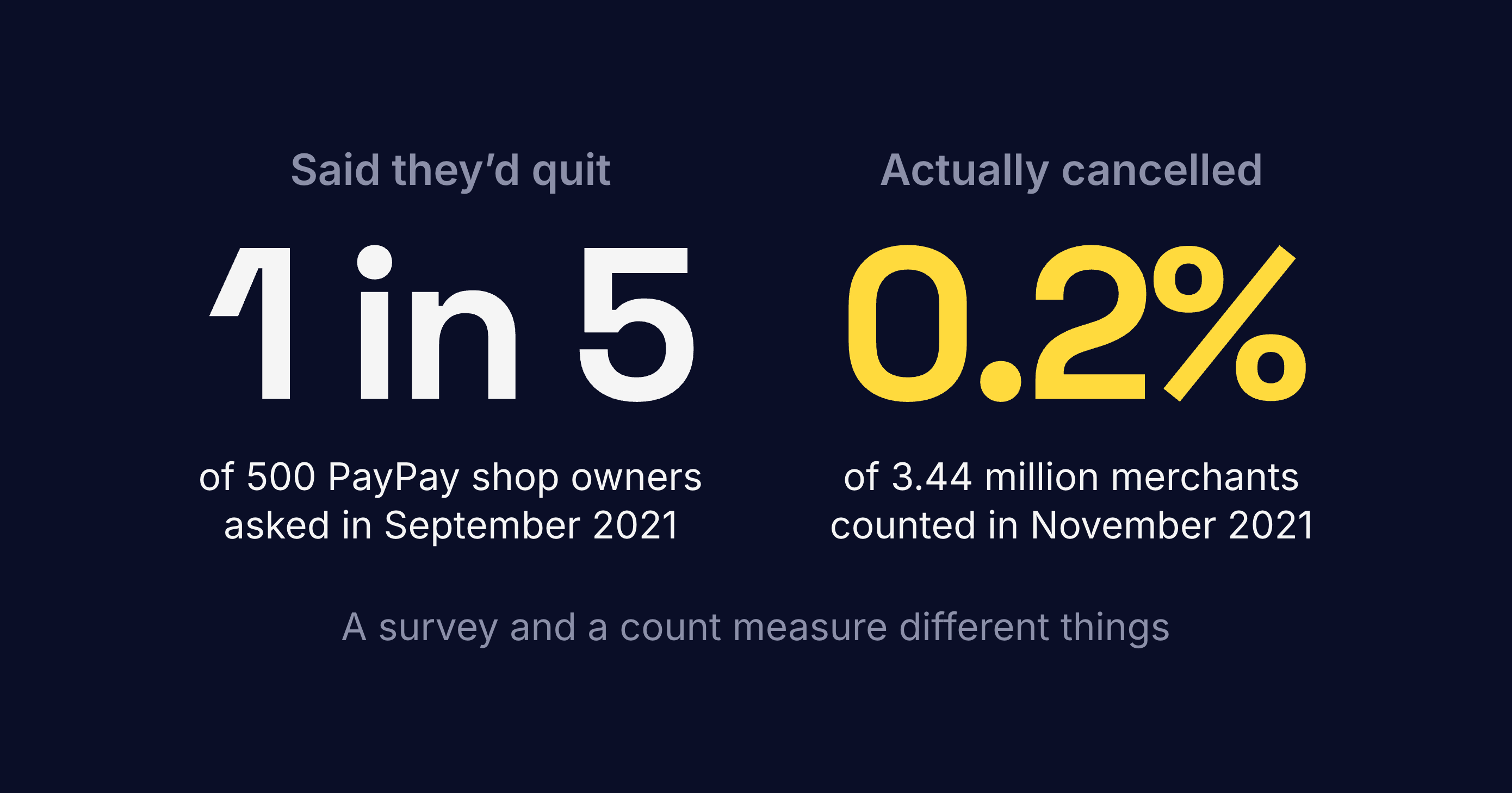
A month later, a survey of 500 of those shop owners found more than 1 in 5 planned to quit.
In November, PayPay’s part-owner counted how many merchants had actually cancelled. 0.2%.
That gap is worth knowing about if your 2027 plan has a free tier, a free pilot or waived fees in it. So is how PayPay got there, because it isn’t the story people usually tell.
That story goes like this. PayPay launched in Japan in 2018, late to QR code payments. It waived fees for small merchants for up to three years, gave away billions of yen in cashback, and took the market. In March 2026 it listed on Nasdaq.
Free played its part. It just wasn’t the part that did the work.
Free came with a deadline
About ten weeks before launch, PayPay promised merchants three years without fees. On launch day it named the date: the end of September 2021.
So the bill in 2021 was no surprise. Every shop had known it was coming since the day it signed up.
Free got the meeting. People did the selling.
A free offer removes the first objection. That’s all it does. It doesn’t set anything up, and it doesn’t get a single customer to pay with the app.
PayPay’s prospectus says people did that work. It outsourced merchant recruitment to SoftBank Corp. and sent a sales team of several thousand to visit shops in person across Japan.
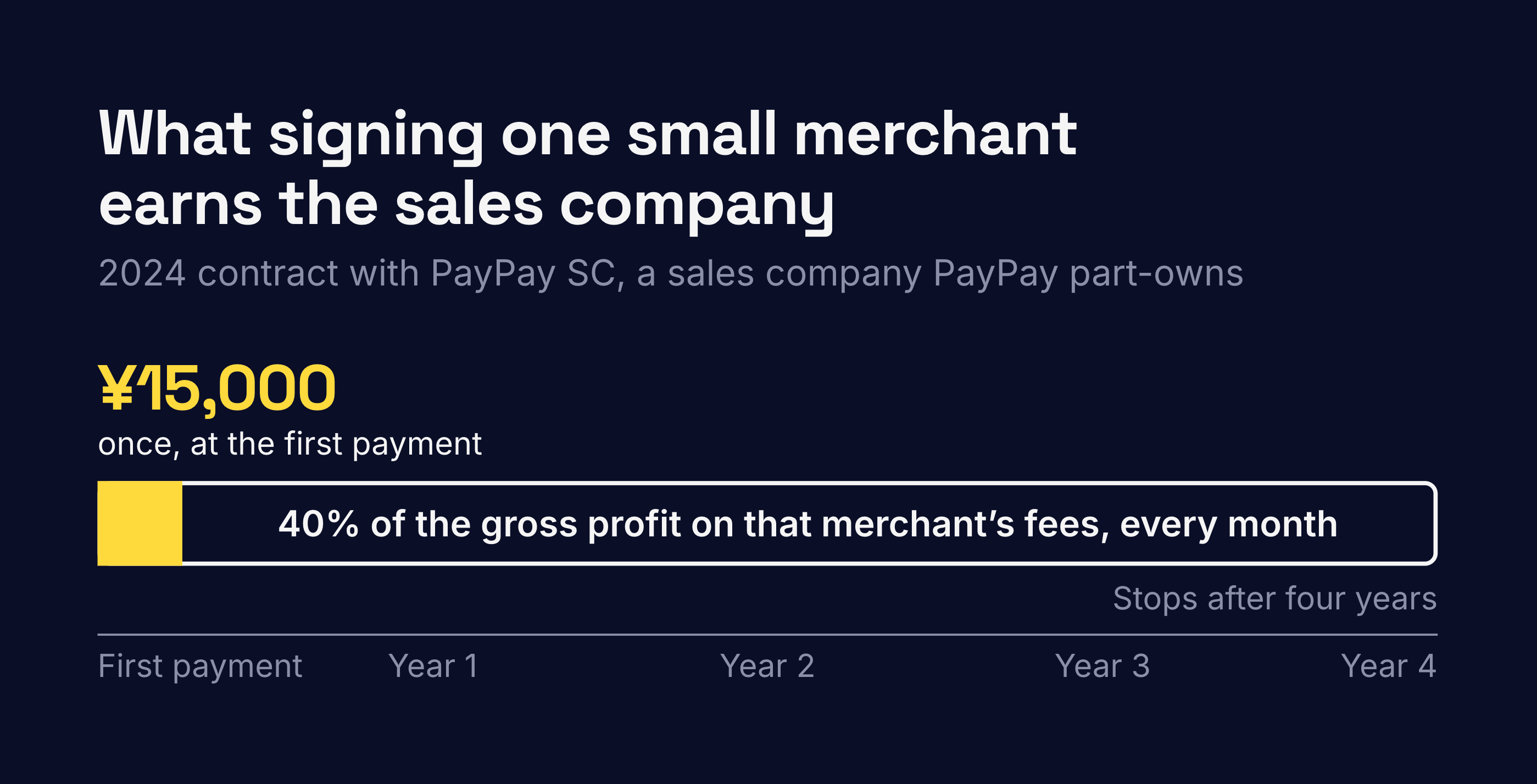
Selling still costs real money there. Under a 2024 contract, PayPay pays a sales company it part-owns ¥15,000 for every new merchant that starts taking payments. On top of that, it pays 40% of the gross profit on that merchant’s fees for four years.
This is why PayPay looks nothing like the free plans most of us know. Notion and Clay grew without big sales teams because one person could start using them alone. A shop can’t. A QR code at the till does nothing until customers want to pay with it.
Somebody paid the customers to show up
So PayPay paid them. Two ¥10 billion cashback campaigns, in 2018 and 2019, gave shoppers up to 20% back.
Then other people started paying too. The government subsidised cashless rebates for nine months from October 2019, and local governments ran their own campaigns. In FY25, PayPay says, most of the cost of its points promotions came from others: merchants, government and partners. (PayPay’s financial year ends in March, so FY25 is the year to March 2025.)
The day free ended
When the fee came, it was 1.6% to 1.98%. Shops that signed up to a ¥1,980-a-month plan got the lower rate, plus 3% of their PayPay sales back for up to six months.
The owners who planned to quit mostly gave the same reason: PayPay wasn’t making them enough to cover the fee. The ones staying said they had to keep up with cashless. By then 41 million people had PayPay on their phones.
Then came the count. Z Holdings, which part-owned PayPay, reported that 0.2% of merchants had cancelled in the ten weeks since the fee was announced. In February 2022, it said the effect was still small.
The survey and the count measure different things, so don’t compare them decimal for decimal. The direction is still hard to miss. Far more owners threatened to leave than actually left.
None of it was cheap. PayPay lost money in each of its first six financial years, through FY24. In FY26 it made ¥80 billion in operating profit.
What to take from it
Free is a price. Treat it like one.
Give it an end date, and say so on day one. PayPay’s merchants had three years’ notice, and the switch barely moved them. A free tier with no end date never builds up to anything. It quietly becomes your price.
Then budget for what free can’t do. Someone still has to set the product up, get the customer a first result and pick up the phone when something breaks. PayPay needed several thousand people for that.
And when you do switch it off, don’t trust what people tell you they’ll do. Count who’s still using you a month later.
Where this could be wrong
Japan in 2018 was cash-heavy and about to get a government subsidy. PayPay had owners who could supply a sales force and carry six years of losses, and most companies have neither. A shop whose customers pay with an app also has more reason to stay than someone using a free tool nobody else relies on. And the 0.2% comes from PayPay’s own side, over a short window.
Before a free line goes into your 2027 plan, one question: of the people who started free with you last year, how many used the product this month?
Figures from PayPay’s US prospectus (March 2026), annual report (June 2026) and press releases, Z Holdings’ investor decks (November 2021 and February 2022) and MMD Research Institute’s survey (September 2021). Checked on 29 September 2026.
Monday GTM is a weekly read on how B2B go-to-market actually works, for the people doing the work. No theory, no fluff. Just what holds up when you look closely.
I write Monday GTM alongside my work at Loop & Ladder, a growth consultancy.