

As a B2B marketer, one of the most unifying experiences is arguing with the sales team about the fields on a demo request form. No matter how big or small the company, or which market we were in, we have fought tooth and nail to strip out anything unnecessary.
For about a decade, the most repeated piece of advice in demand generation was to cut your form fields. Every extra field costs us conversions. Get it down to 3, or 4, or whatever number the agency blog said that year.
And companies listened. Gong’s demo form now asks for 1 thing.
The questions did not go anywhere. They just moved somewhere you cannot see them.
I opened the demo request forms at Adobe, HubSpot, Clay and Gong on 20 August 2026 and read what each one actually collects, including the parts that are not on the screen. I did not submit any of them. Everything below is on the public page if you want to check it yourself.
Adobe asks for 10 things and works out another 20
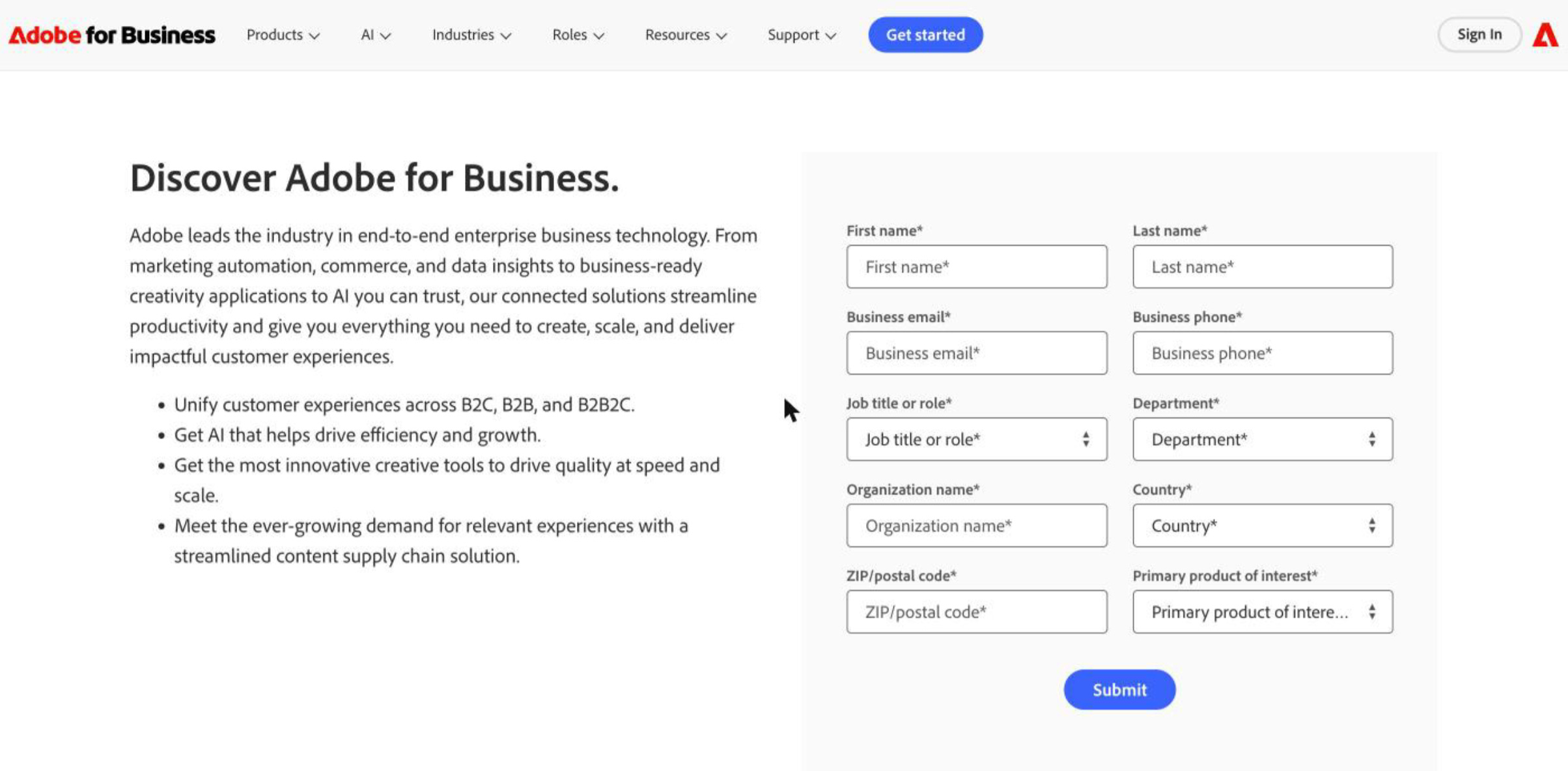
Adobe’s request form has 10 visible fields and every one is required. First name, last name, business email, business phone, job title or role, department, organisation name, country, postal code, primary product of interest.
By the standards of the advice above, this form is blasphemy. The long form everyone was told to kill.
Except the visible 10 are not the interesting part. The page carries 52 fields. Alongside the ones you fill in, there is a block that fills itself: employee count, SIC code, revenue range, internet service provider, city, street address, all lifted off your IP address as you type. There are 8 separate campaign attribution fields. And there are 3 consent flags rather than 1, tracking permission to email you, to call you, and to send you physical post.
Adobe is the honest one. It asks you for a lot, it takes a lot, and the ratio between the two is roughly 1 to 2.
Keep this ratio in mind.
HubSpot gives you three doors
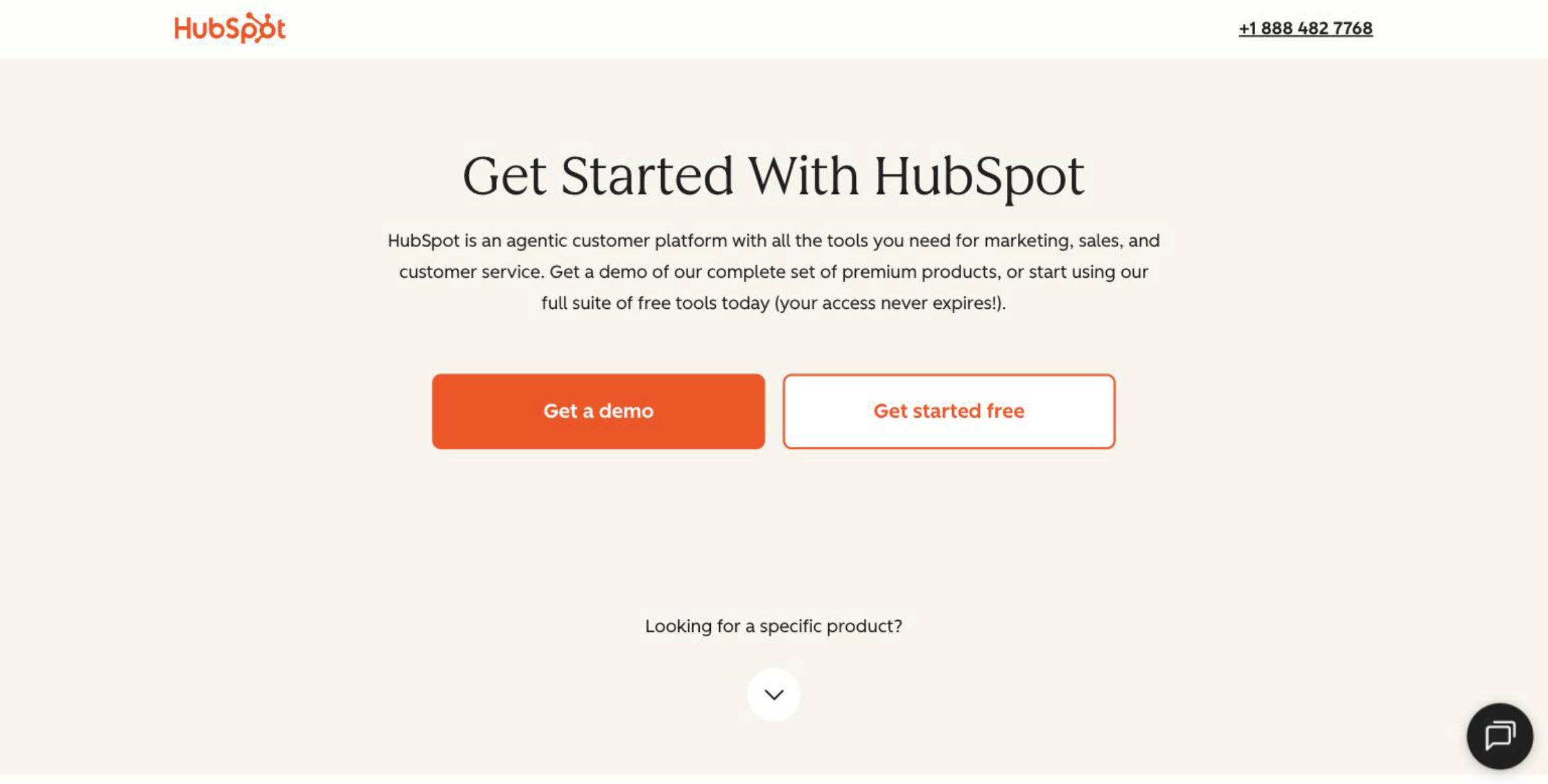
HubSpot’s get-started page opens with no form at all. Two buttons: get a demo, or get started free.
That second button is rarer than it should be. It is a company saying you may buy without being sold to.
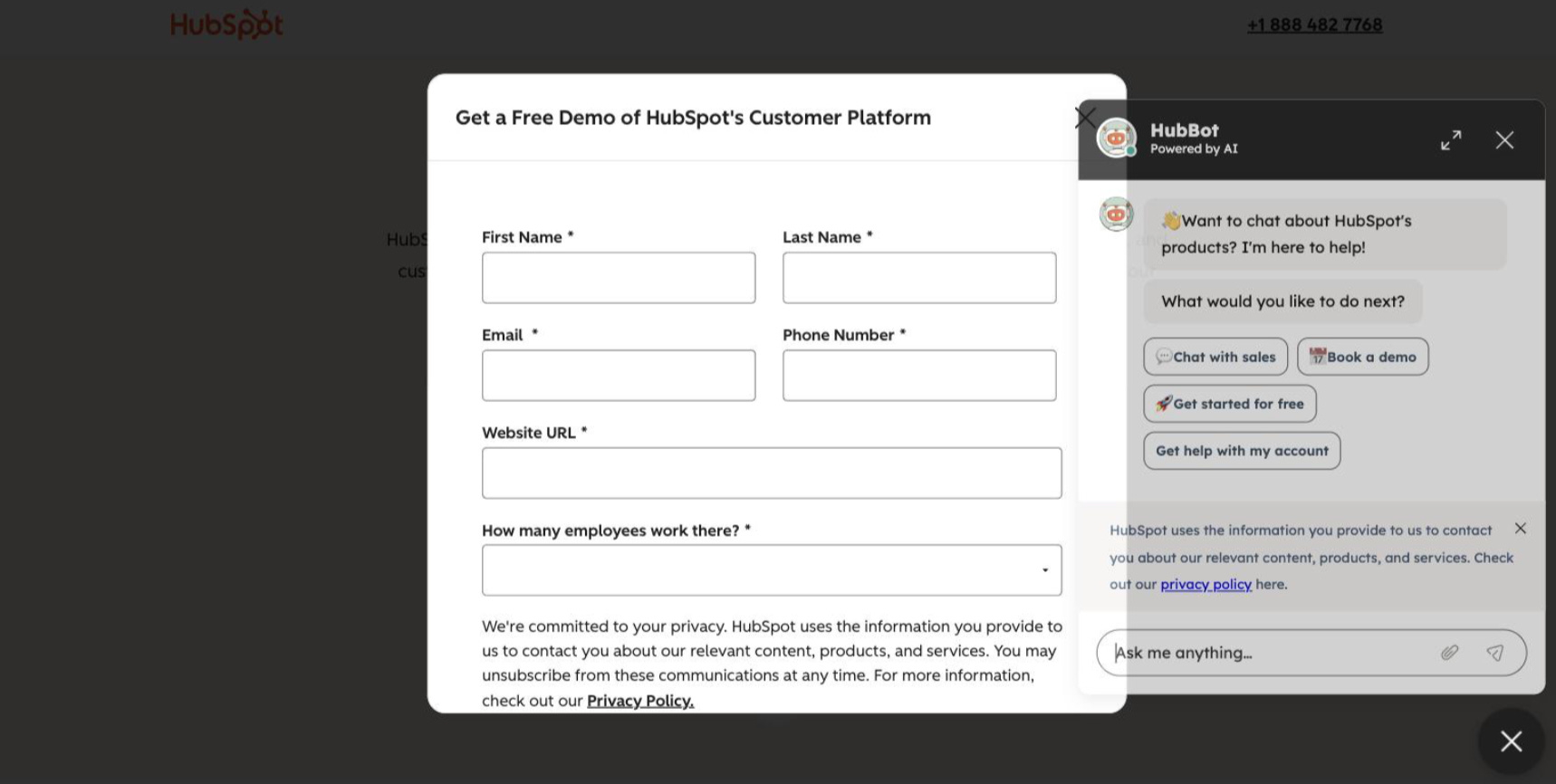
Choose the demo and you get 6 fields, all required, phone among them. Choose free and you skip the entire apparatus.
A third door opens by itself. An AI assistant appears beside the form offering to chat with sales, book a demo, get you started free, or help with your account. The same page runs a form, a self-serve route and an agent, simultaneously.
One more thing, which is the tell. That 6-field form is rendered 9 times on the page, once per product, each instance carrying its own identifier. The form is identical every time. The only thing that differs is which one you touched. HubSpot is not asking you 9 different questions. It is recording which shelf you were standing in front of.
Clay makes you identify yourself before you can say what you want
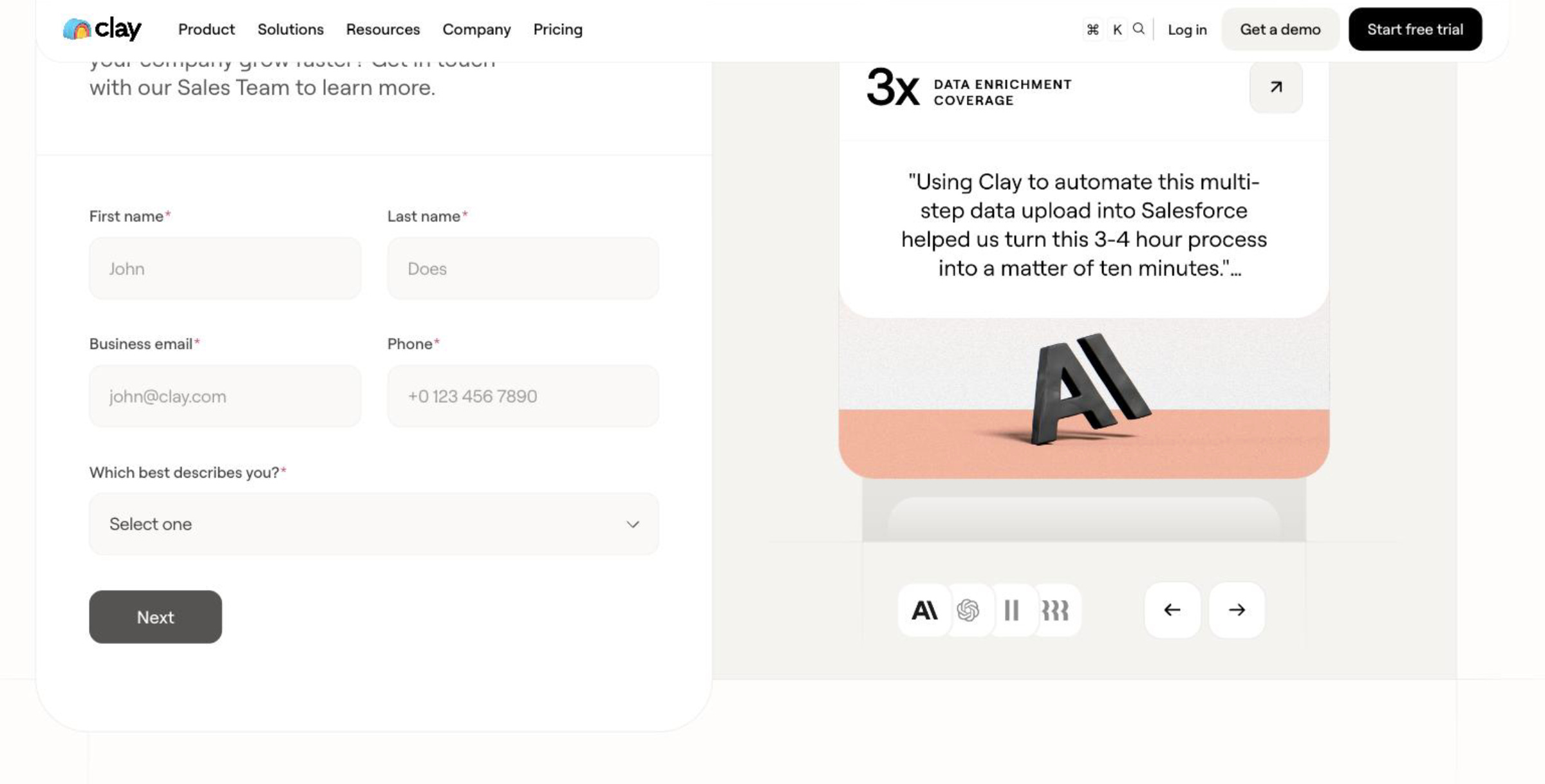
Clay asks for 5: first name, last name, business email, phone, and a dropdown asking which best describes you. Four are required.
Then there is a Next button, and behind it a second step where you choose your use case from about 15 options. Account scoring, intent signals, automated outbound, list building, CRM clean-up, and so on.
So the sequence is name, email, phone number, and only then are you permitted to say what you came for. The thing you actually want is the last thing anyone asks about.
While you are still on step 1, the page is already working. Change the dropdown from rev ops to marketing and the entire right-hand column rewrites itself. The heading swaps. The testimonials swap. The statistics swap. Choose rev ops and you get ElevenLabs on automated lead scoring. Choose marketing and you get Verkada on ad targeting match rates. You have submitted nothing. You have been segmented and re-pitched anyway.
There is a sentence beside that form, from a customer, about how every lead arrives pre-qualified, scored and routed automatically. It sits directly next to the box where you type your phone number in by hand.
I do not think that is hypocrisy. I think it is the most honest thing on the page. Automation happens after you have identified yourself, never before, because the whole system runs on knowing who you are first.
Gong asks for one thing and the page carries thirty
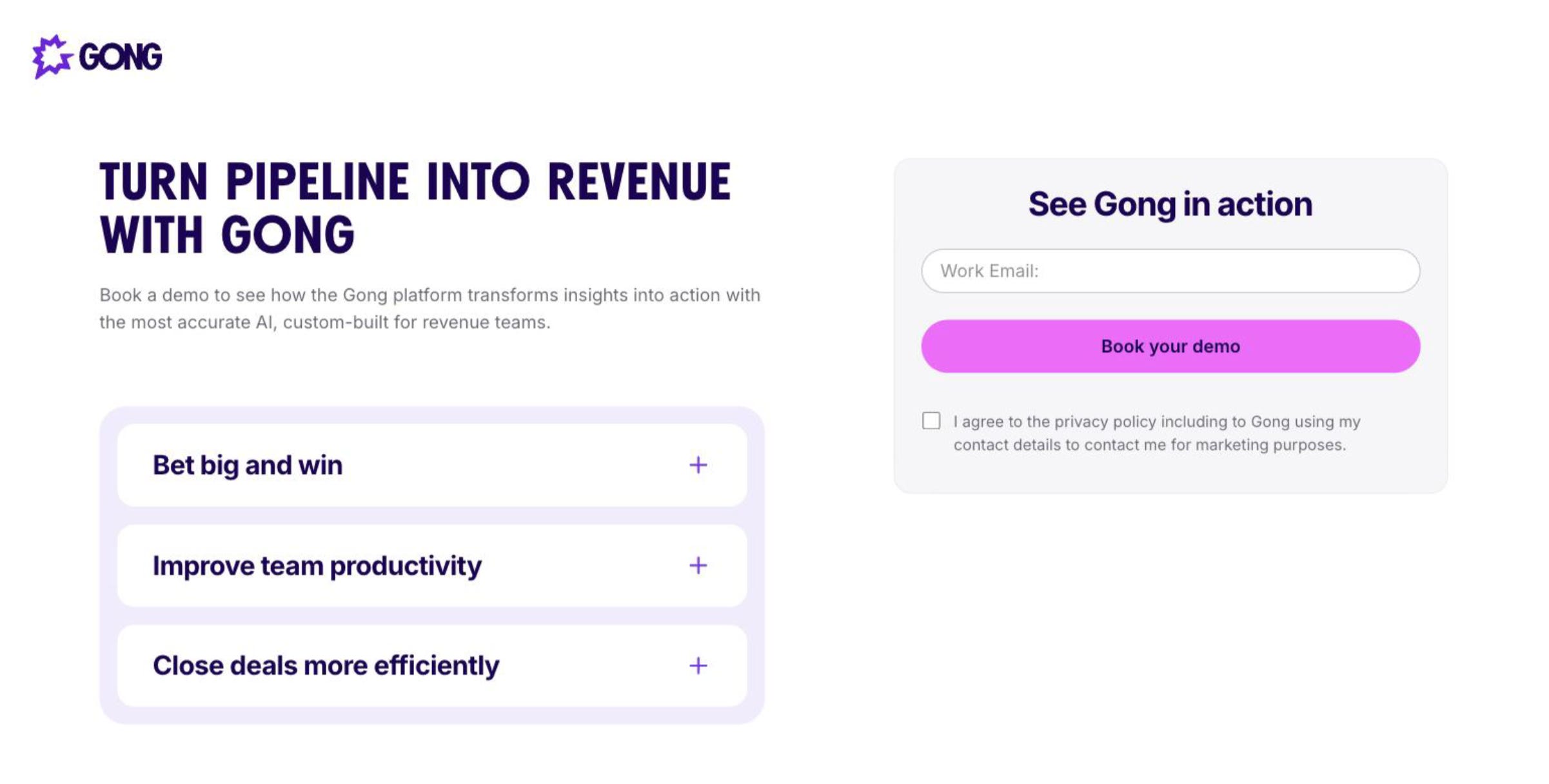
Gong’s form is a single box. Work email. One button. A consent line underneath. Even the site navigation has been stripped off the page, so there is nowhere else to go.
By the logic of the advice, this is the perfect form.
There are 31 inputs on that page. Twenty-nine are hidden.
Most are the ordinary furniture of a marketing stack: the UTM set, a Google Ads click identifier, an analytics client identifier, the page you arrived from, your billing country, a partner referral key. Everyone has those.
Three are not furniture.
There is a field called Clearbit_Job_Seniority__c. That is the job title question. It did not get deleted when the form got shorter. It got answered on your behalf, from your email domain, before you finished typing.
There are fields called mk_customer_fit_segment__c and mk_customer_fit_signals__c. You are being scored while the page is open.
And there is a field called self_schedule_presented__c. That one records whether you were shown the option to book a slot straight away.
Read that again. Somewhere in the system there is a decision about whether you are the kind of visitor who gets to skip the queue, and it is made before you have told anyone anything except your email address.
Who gets to skip the queue
Line the four up by how much they ask.
Adobe asks for 10 things, and works out your employee count, revenue range, SIC code and street address from your IP address while you type. HubSpot asks for 6, and offers you a free door out and an agent sitting beside the form. Clay asks for 5, then another 15 behind a Next button, and rewrites its own testimonials to match whichever role you pick. Gong asks for 1, infers your seniority from your email domain, and scores your fit before you submit anything.
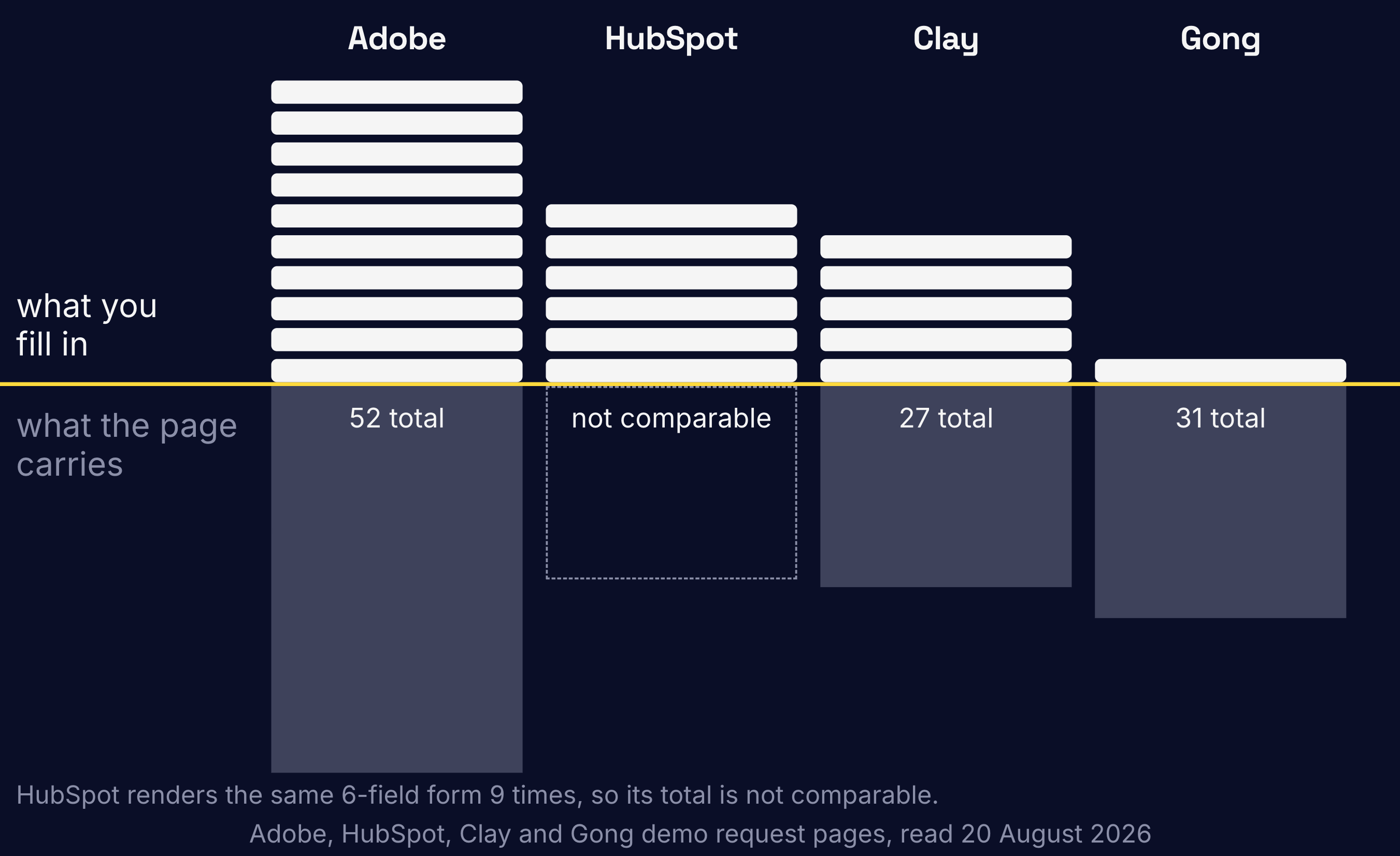
The ask collapses from 10 to 1. What sits underneath it does not.
That is the whole thing. The industry optimised the visible surface and left the collection intact underneath it. Nobody removed the questions. They just stopped asking you.
Which is why the field-count argument was always the wrong argument. It measured the only part of the system the buyer could see.
It is worth knowing what the most-quoted rebuttal actually says, because it does not say what people use it to say. RevenueHero, which sells inbound routing software, analysed over a million form submissions and found top performers converting at 77% with 2 fields and 76% with 13. That pair of numbers now circulates as proof that field count does not affect conversion. It measures something else. It counts how often an already-submitted form becomes a booked meeting, which starts after the moment the field-count debate is about.
So the case for shorter forms has not been refuted. That study never measured the thing shorter forms are supposed to protect, which is whether people finish the form at all.
I am not against enrichment. Guessing a company’s headcount from its domain is not a crime, and a shorter form genuinely is kinder. The problem is narrower than that and worse. When a question is visible, you can decline to answer it. When it is inferred, you cannot. And when a field like self_schedule_presented__c exists, the sorting has already happened by the time you would have had a chance to object.
What to do with this on Monday
Not a field count. Four questions about your own form, which is almost certainly an accident nobody has audited since the last person left.
Who wrote each field, and are they still here? Most demo forms are a sediment of requests. Sales wanted headcount in 2023. Someone wanted attribution. Compliance wanted a consent box. Nobody removes anything. Go through yours field by field and name the person or the reason. Any field without one comes off.
What are you inferring, and would you say it to the buyer’s face? That is the test, not whether enrichment is permitted. If the answer is no, the inference is the problem. Hiding it is not a fix, it is just the reason nobody has had to deal with it.
Does a fast lane exist, and who decides who is in it? If you route some visitors to instant booking and others to a queue, that is a real call affecting real revenue. It should be a decision someone owns, with criteria written down, not a setting inherited from whoever configured the routing tool.
Is there a door for people who do not want to talk to you? HubSpot has one. Gong does not. Neither is automatically right, but it should be a choice about your buyer rather than a habit.
I was once building a lead form for an acquisition campaign. The sales team wanted postal code on it, so they could work out which account manager the lead belonged to. I knew it would cost me drop-offs. They knew it would get someone on the phone faster. I lost that one, and the field went on the form.
What I did not appreciate at the time is that we were arguing in the open. The field was on the page, the buyer could see it, and I got to lose the argument in a room with other people in it.
Adobe still asks for postal code. Gong works out where you are from your IP address, and nobody has the argument at all.
What is on your demo form that nobody can justify any more?
If this was useful, subscribe. Monday GTM goes out every Monday.
Monday GTM is a weekly read on how B2B go-to-market actually works, for the people doing the work. No theory, no fluff. Just what holds up when you look closely.